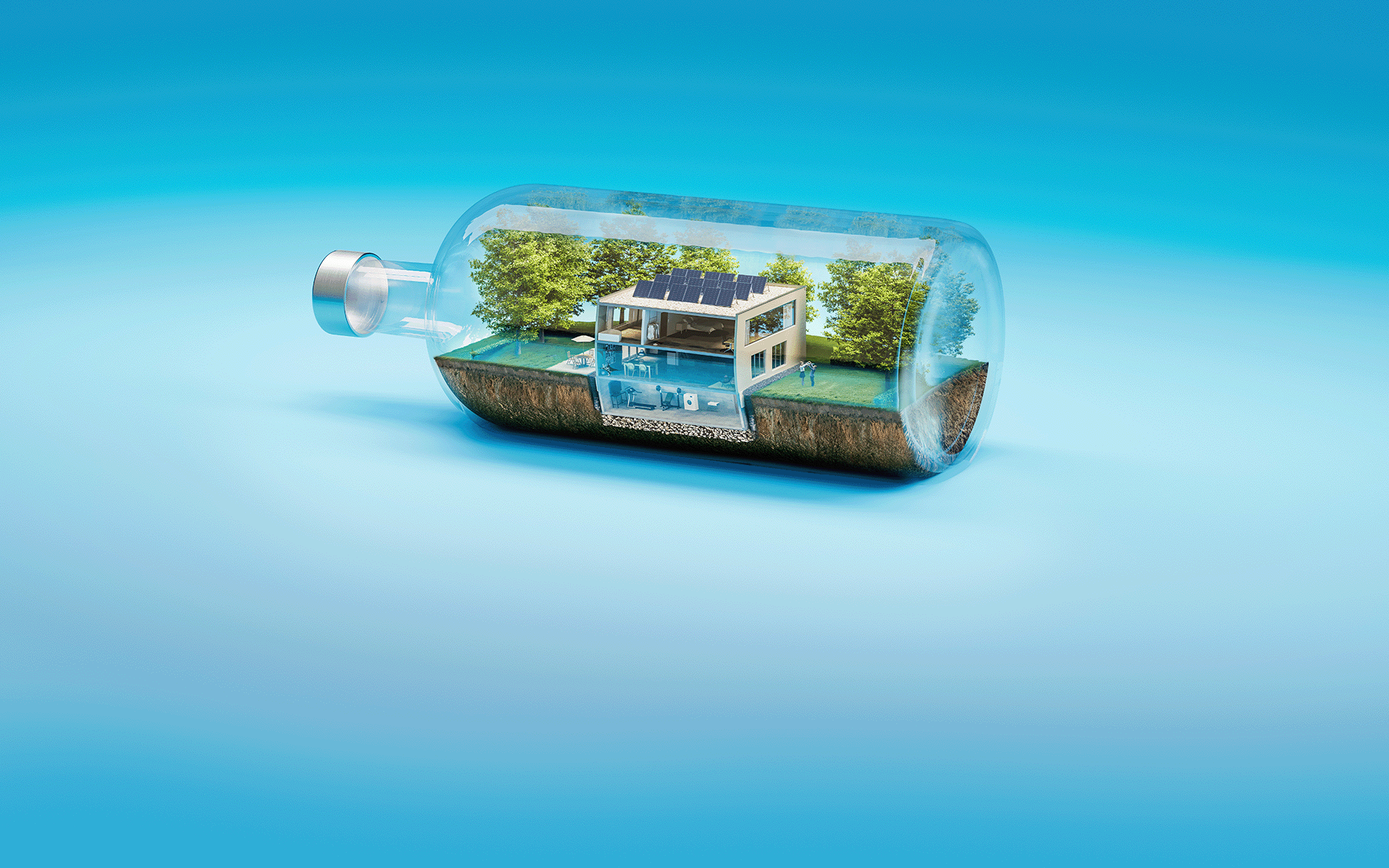
Mineral thermal insulation in building construction
Insulating against the ground is an effective method of saving heating energy and reducing CO2 emissions. The performance of mineral insulation remains constant, even when unforeseen natural events occur. Good insulation is the basis for consistently low heating costs and stable value retention.
Characteristics
Insulating with MISAPOR means future-oriented insulation. Foam glass gravel differs from conventional insulation in that it does not require any primary resources and can be reused without reprocessing.
The insulating properties remain constant over the entire service life and are therefore completely renovation-free.
Perimeter horizontal
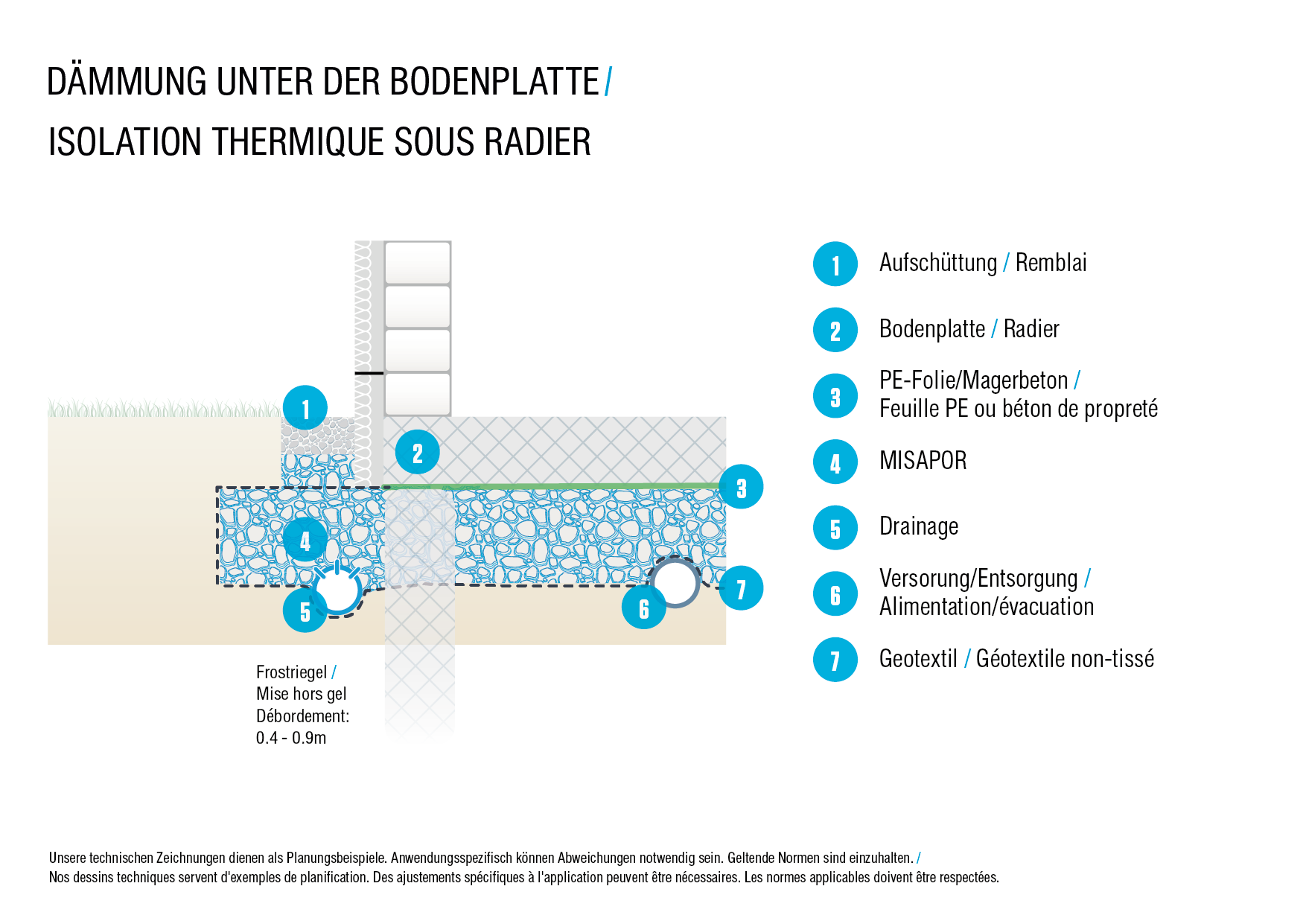
First choice for sustainable insulation against the ground. MISAPOR not only insulates perfectly, it also stabilizes the building ground and impresses with its high drainage performance. Even when it comes to installation, foam glass gravel is one step ahead: a complete MISAPOR foundation under a floor slab for a residential building saves up to 3 days of construction time.
Characteristics
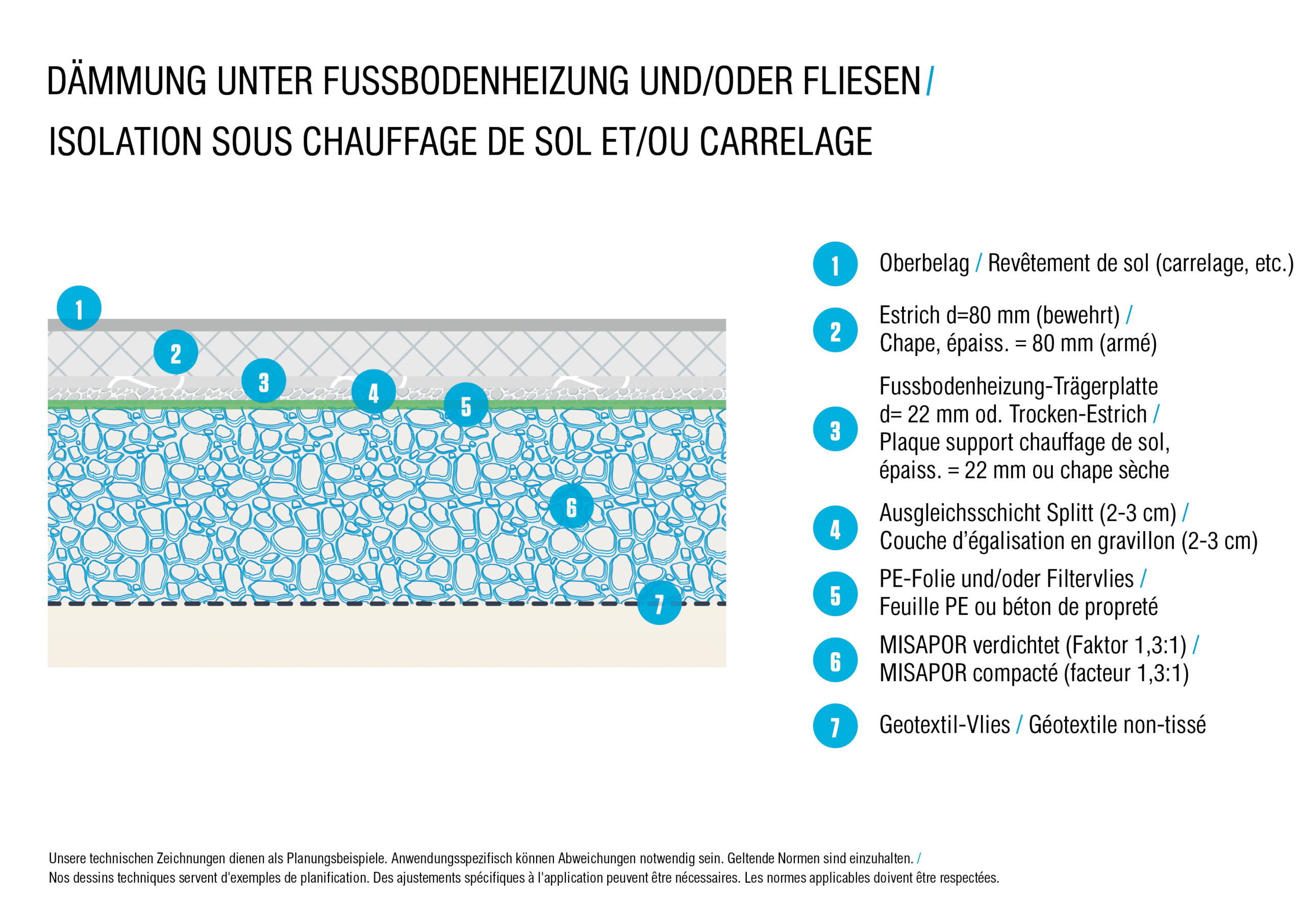
- Thermal insulation including cleanliness and capillary-breaking layer
- Building without thermal bridges
- Frost aprons that are not statically loaded can be omitted
- High load-bearing capacity thanks to high compressive strength
- Quick and easy installation
Vertical perimeter (Wall-Bag)
The handling of this energy-optimized and thermal bridge-free system is typically simple for MISAPOR: The Wall-Bags are only lightly fixed to the walls and the ready-made chambers are then filled with foam glass gravel. Simple, time-saving and cost-effective.
Characteristics
- Optimal vapor diffusion
- Perfect drainage, even on slopes
- Thermal bridge-free construction (together with perimeter insulation)
- Resistant to damage, including from rodents, mice and insects
- Extremely quick, easy and safe to install
Passive house
Passive houses must be actively insulated and at the same time place demands on ecology, economy and living comfort. Naturally with an ecological building material. Naturally with MISAPOR.
Thermal bridge-free construction is the motto: an insulating, gapless envelope encloses the building and ensures a pleasant indoor climate – with greatly reduced energy consumption. Now and in the future, because MISAPOR foam glass gravel easily meets even future EnEV requirements.
Characteristics
- 100% ecological (98% glass, 2% minerals)
- reduces the impact on the environment during production
- Conserving resources
- Building without thermal bridges, saves energy, reduces heating costs
- Quick and easy installation
- Long service life
Renovation of old building
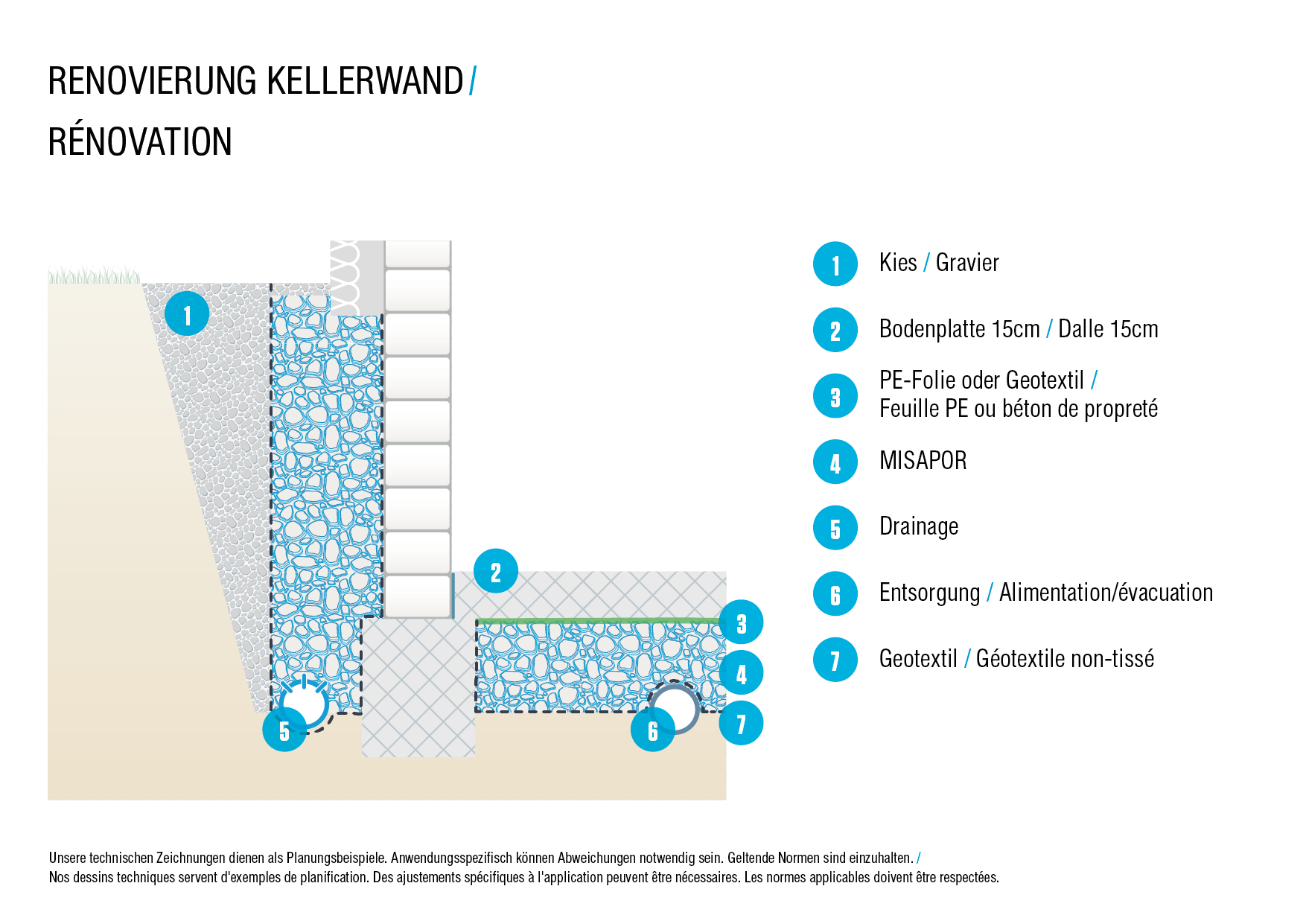
MISAPOR is a professional for building renovations. Thanks to the wide range of possible applications, foam glass gravel can be used to gain living space in the simplest possible way and to install thermal insulation on uneven building structures against the ground. MISAPOR is also load-bearing, even without a floor slab.
MISAPOR can be used loose or cement-bound. MISAPOR is very often used as a capillary-breaking substructure with a thermal insulation function. Ask about our different fractions.
Characteristics
- Absolutely harmless in terms of building biology
- No rising damp
- Very good thermal insulation properties
- No vermin, rot-proof
- Low lateral pressure on sensitive masonry
- Easy installation and compaction
Radon concept
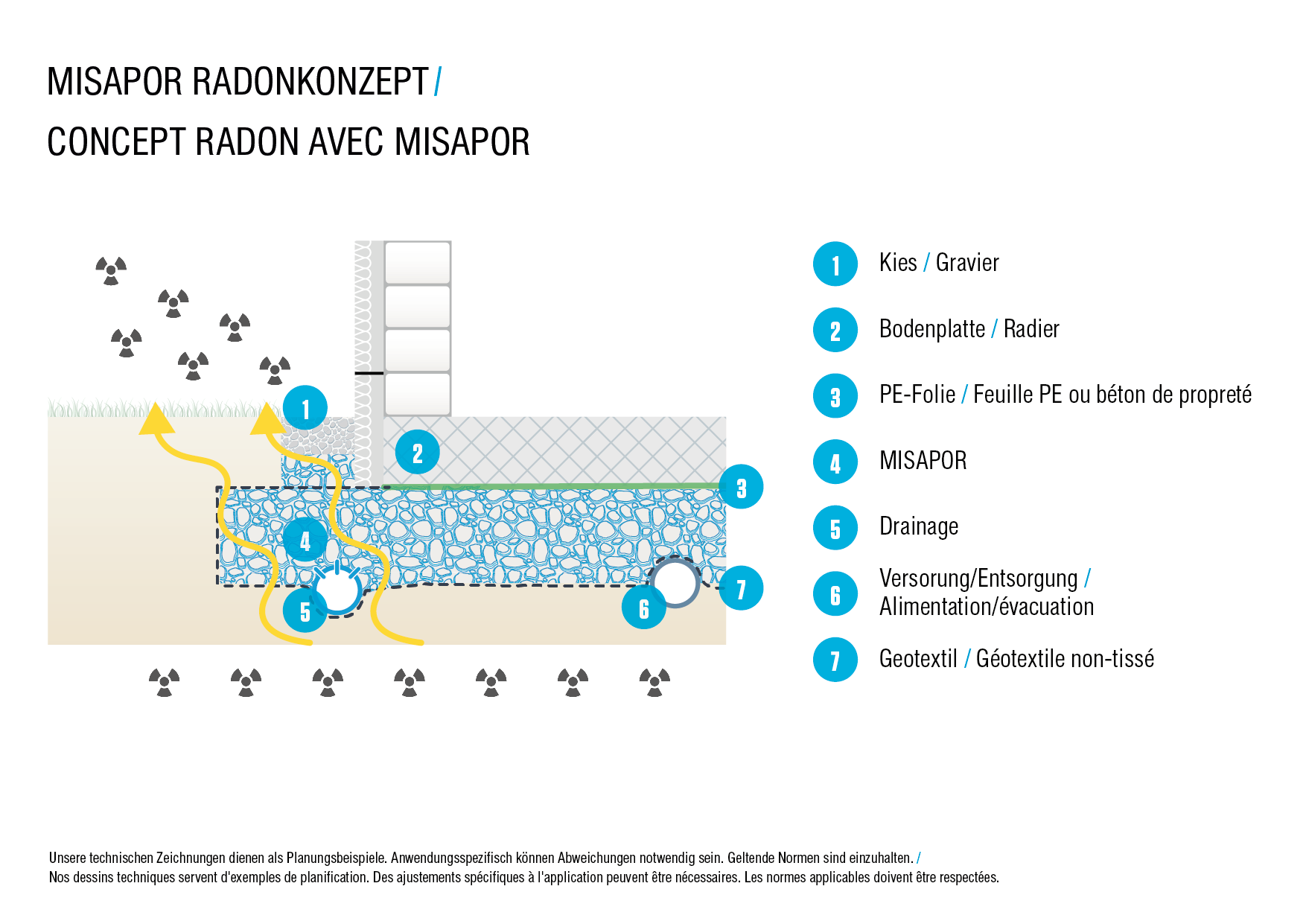
Radon is a naturally occurring radioactive gas in the ground. Even in high concentrations, the noble gas is odorless and invisible. According to the Federal Office of Public Health (FOPH), radon and its decay products are the second most common cause (approx. 10%) of lung cancer*.
*Source: Radon, precautionary measures for new buildings, BAG 2012
A radon concept with MISAPOR foam glass gravel is cost-effective to implement during the construction phase and foresighted planning pays off.
In addition to insulation and drainage, a MISAPOR foundation under the floor slab offers much more. If higher radon concentrations are detected during operation, the MISAPOR layer can simply be actively ventilated using a fan and exhaust air pipe, for example via the roof.